When Words Fail, So Does Care
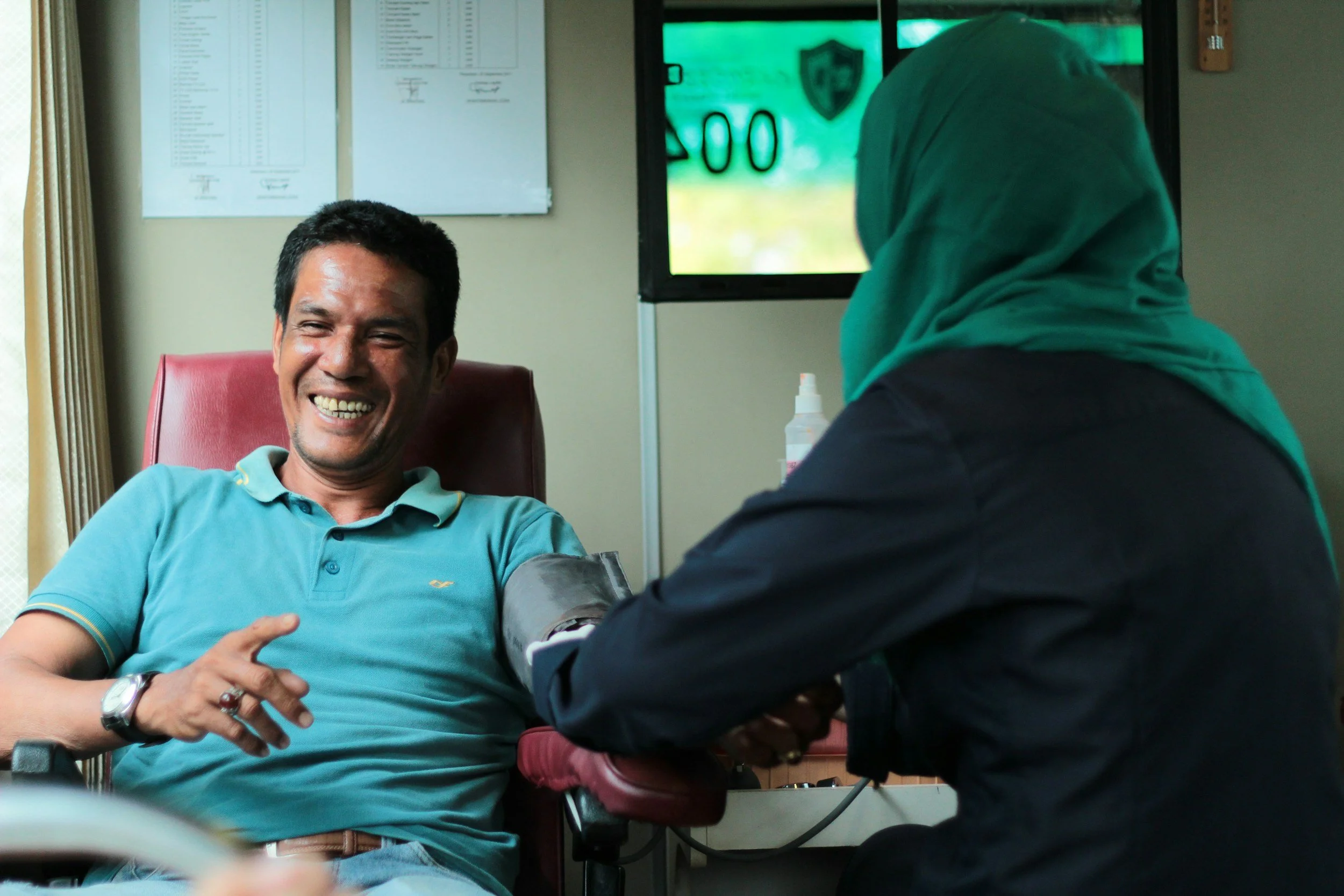
It is early morning at Groote Schuur Hospital, a public hospital in Cape Town. Nomvula is in labour. She has been waiting for hours. She is in pain, scared, and about to bring a new life into the world. A midwife walks in, gloves on, ready to work. Their eyes meet. The words do not.
This is not a story about faults. The midwife is trained, dedicated, and doing her best. The woman is brave and trusting, putting her body and her baby in someone else’s hands. And yet, something essential is missing, because the midwife speaks English, and Nomvula speaks isiXhosa. And in that gap between the two languages, something quietly breaks down.
This is what happens when language becomes a barrier to healthcare. Not a dramatic failure, not negligence. Just two people in the same room, unable to understand each other.
Samira, a postgraduate student at the University of Cape Town and early-career medical anthropologist, has spent time in clinics across the Western Cape researching how South Africa’s health system works and for whom. Her work focuses on digital health, maternal health, and what she calls linguistic discord: when doctors and patients don’t speak the same language.
“Giving birth is already such a vulnerable state to be in. People are touching you. You’re emotionally defenceless. This is one of the biggest moments of your life. And you can’t even understand when someone is coming to say, “Is it okay if I touch you here?” Or, “This is my name, what’s yours?” If you don’t have access to English, you’re not afforded that really basic dignity.”
Any healthcare worker will tell you, quality healthcare is not just about modern buildings or specialist care. It is also about dignity. Knowing someone’s name. Being asked for permission before someone touches you. Understanding what is happening to your own body. These things matter, too.
South Africa is celebrated for its diversity, with twelve official languages, including Sign Language, enacted by President Ramaphosa in 2023. That's a dozen cultural communities, and a country that promises equality for all of them. However, in practice, inside a hospital, the situation can be different. Research pointed out that it is unusual for healthcare workers and patients to share the same home language. Medical training in South Africa happens mostly in English, and in many hospitals, English is the main working language. But many patients speak isiXhosa, isiZulu, Sesotho, or another African language as their first and sometimes only language.
What science says: a universal problem with real consequences
What Samira observed in the Western Cape has been carefully documented by researchers both in South Africa and around the world. The language gap between caregiver and patient is not a small inconvenience. It is a barrier that can come at a real cost.
A 2024 study at a psychiatric hospital in South Africa in the Western Cape painted a striking picture. Researchers found that when healthcare providers such as doctors could not speak their patients’ language, often isiXhosa, the hospital had no choice but to ask security guards to step in as interpreters. Participants involved in the study, including doctors, nurses, social workers, psychologists and psychiatrists, knew this was not ideal. Doctors worried about the quality of treatment. Security guards felt the weight of responsibility they were never trained for. But there was simply nobody else available because the hospital’s staff did not reflect the languages spoken by the people it served.
And this is not just a South African problem. A review of research from the New York University Rory Meyers College of Nursing, covering 48 studies from 16 countries, confirms the pattern on a global scale. Nurses, often the first person a patient sees, struggle to assess a patient’s condition when they do not share the same language. The same review found that when no interpreter is available, nurses often fall back on gestures, hand signals, and body language to make themselves understood. This takes extra time, tires staff, and still falls short when the situation is complicated. The result is incomplete diagnoses, lower patient satisfaction, and increased stress, not just for patients, but for healthcare workers too.
The pattern is the same worldwide, but countries have taken different approaches to addressing it.
So, who is to blame?
Here is the part where it would be easy to point a finger at the nurse who didn’t learn isiXhosa, at the health system that never made it a priority, or at the woman who didn’t speak English. Blame is a distraction. The midwife did not choose which language her patients would speak. The woman in labour did not choose to be born into a language that the health system was not built for. And the health system is made of people, budgets, and history, none of which changes overnight.
This is a structural problem that needs structural solutions. And the evidence supports this. The University of Cape Town started teaching isiXhosa and Afrikaans to medical students back in 2003, aiming to prepare graduates for the multilingual communities they would serve and to improve access to quality and equitable healthcare. However, a 2024 study exploring graduates' experiences found that, while the Afrikaans training was generally seen as useful, interns felt that the isiXhosa course still needed considerable improvement to help them communicate more effectively with patients.
Efforts to incorporate local languages into medical education reflect South Africa's multilingual reality, but gaps remain between what is taught in universities and the linguistic demands graduates encounter in practice. Dr HA, a South African doctor, describes how university curricula remain limited in their ability to address the country's linguistic diversity:
“I went to Wits University, so I was taught medical Zulu. But now I work in a predominantly Sotho-speaking community.”
Good intentions alone are not enough. The solutions need to match the scale of the problem. And the good news? Solutions do exist, from professional medical interpreters to simple mobile apps, to basic language training for healthcare workers, to new technologies that are beginning to bridge gaps that once seemed impossible to fulfil. We will talk about all of them in our next blog.
Because if there is one thing clear: in healthcare, language is not a detail. It is the beginning of everything. A patient who cannot explain where it hurts, or a mother who cannot ask what is happening to her baby, both are leaving their doctor working in the fog.
If this story made you think differently about language in healthcare, share it with one colleague who works in a clinic.
Note: The opening story of Nomvula is fictional. It is a summary story inspired by real situations documented in research on language barriers in South African hospitals.
This blog was written by Wilfried Irambona, Nsovo Mashakeni, Drashti Sharma and Pratik Kiju.
Wilfried is a Medical Doctor and Public Health professional from Burundi. His work focuses on strengthening primary healthcare systems and advancing equitable access to health services for underserved and last-mile communities.
Nsovo is a South African CGHI intern. As a Postgraduate Researcher in Development Studies (UJ & UWI), Nsovo specialised in African development, governance, and community-based service delivery. Her work focused on rural development, unfinished governments projects, policy analysis, and evidence-driven social transformation as well as Pan-Africanism with 'ordinary' people as a definition of the bottom-up approach in politics.
Drashti is a biomedical researcher focused on diagnostic innovation, exploring how new tools can improve disease detection and health outcomes globally.
Pratik is a One Health scholar and veterinarian working at the animal–human interface, with expertise in zoonotic disease and integrated approaches to global health.
References
Gerchow, L., Burka, L. R., Miner, S., & Squires, A. (2021). Language barriers between nurses and patients: A scoping review. Patient Education and Counseling, 104(3), 534–553. https https://doi.org/10.1016/j.pec.2020.09.017
Habib, A., Von Pressentin, K., & Kaswa, R. (2023). Do not lose your patient in translation: Using interpreters effectively in primary care. South African Family Practice, 65(1), Article 5655. https://doi.org/10.4102/safp.v65i1.5655
Hanft-Robert, S., Shongwe, L., Cossie, Q., Kilian, S., & Mösko, M. (2024). ‘The doctor doesn’t understand Xhosa and the service user doesn’t understand English’ – Exploring the role of security guards acting as informal interpreters in psychiatric care in South Africa. BMC Health Services Research, 24, Article 1239. https://doi.org/10.1186/s12913-024-11722-5
Parliament of the Republic of South Africa. (2023, May 3). The NA approves South African Sign Language as the 12th official language. https://www.parliament.gov.za/press-releases/na-approves-south-african-sign-language-12th-official-language
Van Rooyen, I., Claassen, J., Moodaley, N., Doyle, G., Skade, T., Nash, R., Gxilishe, S., & Hellenberg, D. A. (2024). Multilingual education: Medical interns perceptions regarding the usefulness of non-mother tongue communications skills taught during the undergraduate curriculum. BMC Medical Education, 24, Article 450. https://doi.org/10.1186/s12909-024-05414-1