10 Things We Learned About Intergenerational Leadership in Global Health
What does meaningful intergenerational leadership actually look like?
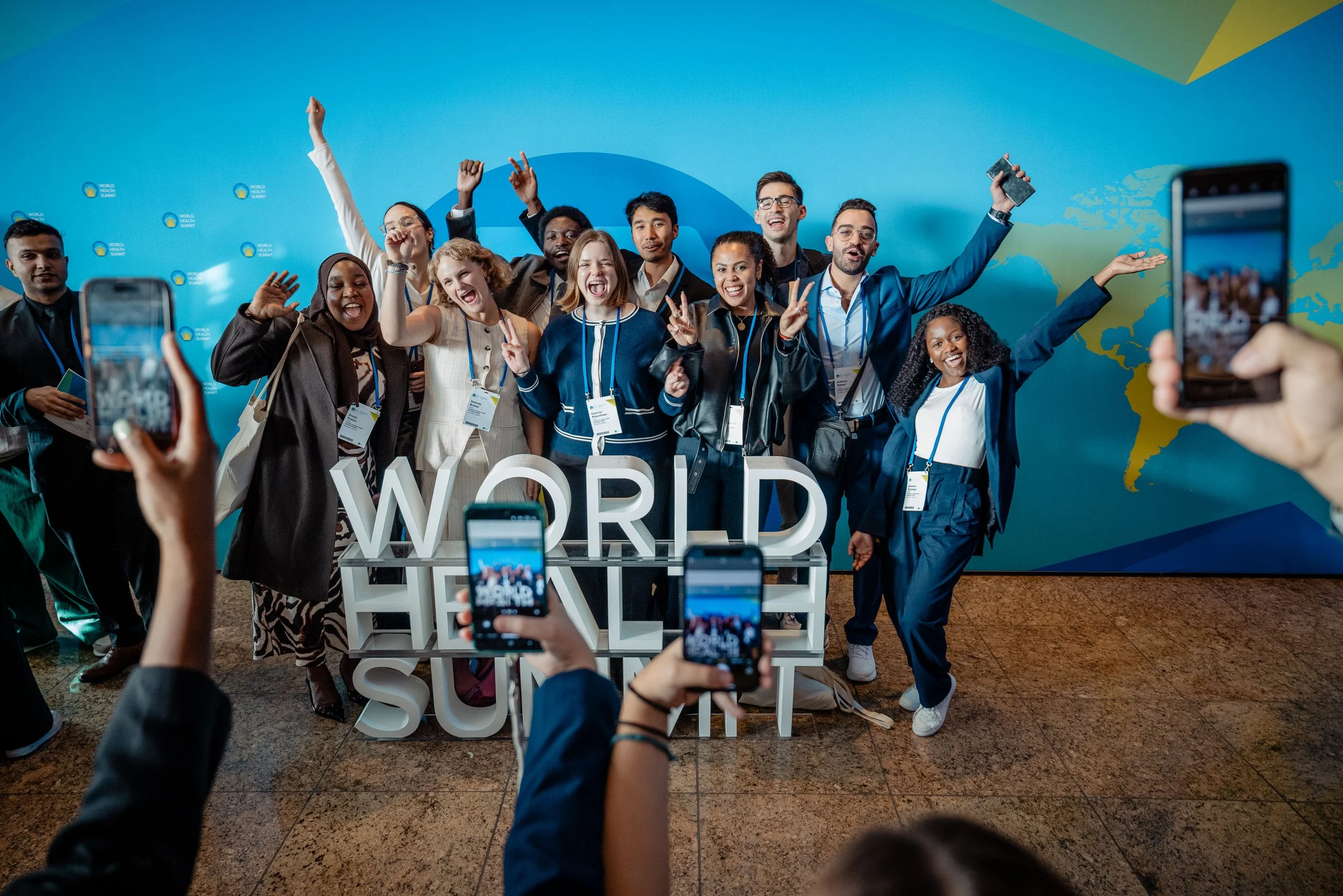
That was the question at the centre of the Coalition for Global Health Innovation’s virtual pre-session, Shared Power, Shared Future: Intergenerational Leadership in Global Health, held ahead of the World Health Summit 2026.
Bringing together emerging and established professionals from different countries, career stages and areas of global health, the session created space to move beyond familiar conversations about “youth participation” and ask a more fundamental question:
How can global health move from meaningful youth participation to genuine intergenerational power-sharing?
The discussion was rich with experiences, challenges and practical ideas. Ten lessons stood out.
Being in the room is not the same as having power
One of the clearest messages from the discussion was that representation alone is not enough.
Meaningful participation means more than inviting young professionals to attend a meeting, speak on a panel or provide feedback after decisions have already been made. It means involving people at different career stages in shaping the agenda and making decisions from the beginning.
As Eniola Olabode, CGHI Communications Co-Lead and WHS 2026 Delegate, reflected, young professionals should not simply be a separate group within an organization that is consulted after important decisions have been made. They should be part of the rooms where those decisions are shaped.
The shift we need is therefore: from being present → to having influence.
Intergenerational leadership is not “young vs. senior”
During the conversation, we also challenged the language we often use.
Terms such as “youth” and “senior” can unintentionally create opposing categories. Career stages are not fixed identities, and there is no single timeline for a person's professional life.
Instead, intergenerational leadership should recognize people across different generations and career stages, with each bringing different experiences and perspectives to the table.
The goal is not to replace one generation with another. It is to create the conditions for different generations to work together and complement one another, and a system that values experience and new thinking equally.
Experience should flow in both directions
Established professionals bring years of institutional and professional experience. Emerging professionals can bring new perspectives, recent experiences from communities and changing ways of understanding global health.
Both forms of knowledge matter.
This also means rethinking the traditional mentor–mentee relationship.
Mentorship should not always be a one-way transfer of knowledge from the more experienced person to the less experienced one. Intergenerational collaboration creates opportunities for mutual learning.
As Jelena Branković, CGHI Vice President, highlighted, meaningful collaboration requires not only being willing to teach, but also being willing to be taught by someone with a different perspective.
We can all be both teachers and students.
Co-creation needs to start at the beginning
One of the strongest practical examples came from work involving early-career researchers in health promotion and antimicrobial resistance, as highlighted by Lilian Ngaruiya, CGHI Community Officer and World Health Summit 2026 Delegate.
Initially, early-career researchers were brought into projects primarily as stakeholders after projects had already been developed. Over time, their involvement shifted earlier in the process: they became part of proposal development, target-setting, indicator development and intervention design.
That change mattered, and it demonstrated that the question is not simply:
“Did we consult early-career professionals?”
but:
“When did we involve them?”
If people are only invited at the end, they are helping to validate a decision.
If they are involved from the beginning, they can help create it.
Power sharing needs to be built into institutions
Good intentions are important, but they are not enough.
If meaningful participation depends entirely on whether an individual leader decides to invite someone into a conversation, progress can easily disappear when people or priorities change.
The discussion therefore pointed towards the importance of institutionalizing power-sharing.
That could mean:
defined roles for people at different career stages;
formal representation in decision-making structures;
accountability attached to those roles;
standardized pathways for emerging professionals to participate; and
organizational policies that make meaningful participation part of how institutions operate.
The goal is to move from:
“We should include youth voices.”
to:
“Our structures are designed to include different voices.”
The way we design spaces can change who feels able to speak
Intergenerational power dynamics are not only created by organizational charts and titles.
They can also be created by the physical and social environments in which we interact.
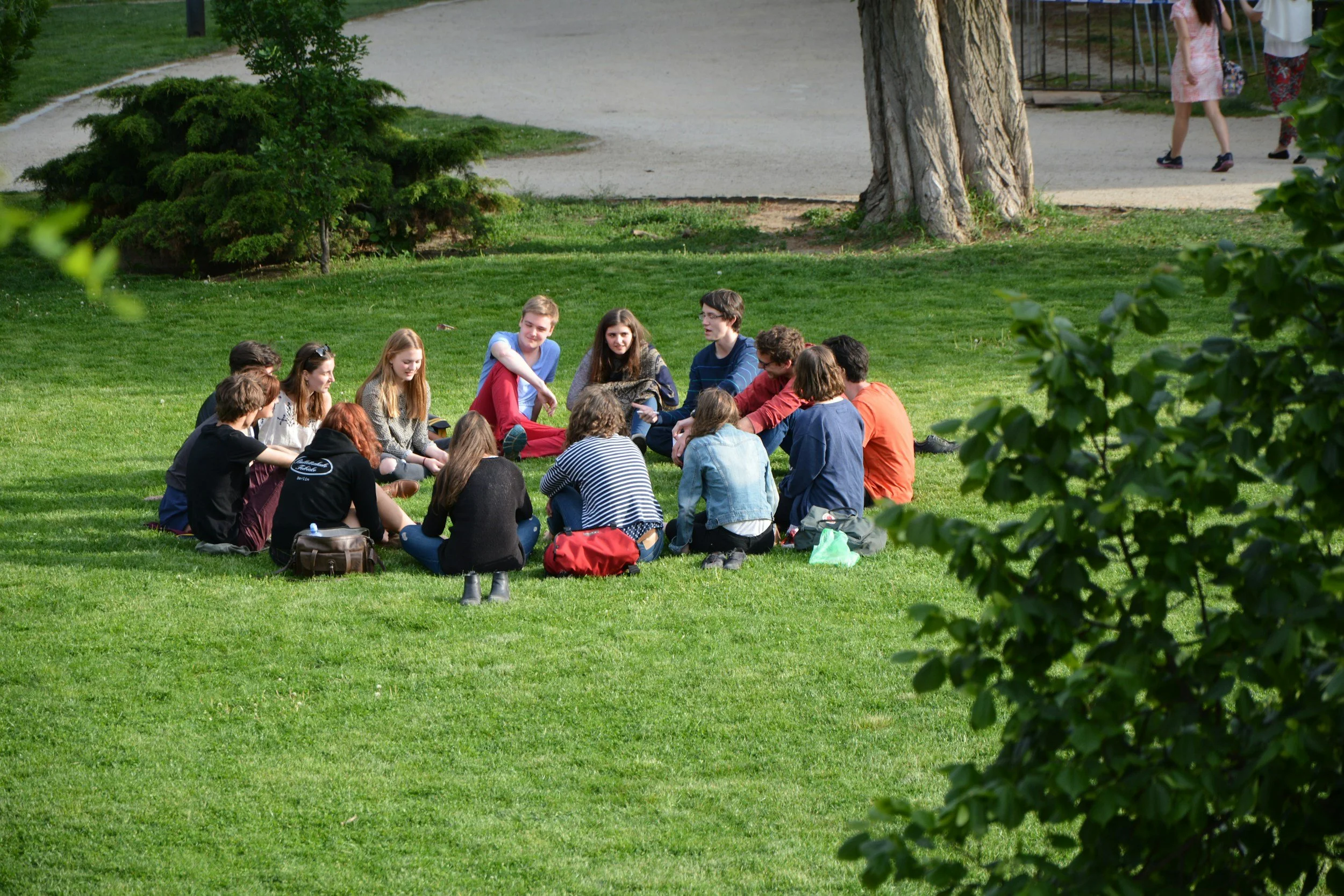
CGHI Community Officer and WHS 2026 Delegate, Saleha Suleman shared an experience from a co-creation workshop where people sat together in a more informal setting rather than in a traditional conference arrangement. Although she believes this has happened unintentionally, this helped break down some of the barriers between participants and made it easier for quieter people to contribute.
Another example came from a university classroom where the traditional teacher–student hierarchy was intentionally disrupted. Rather than students simply receiving knowledge from the lecturer, both sides were encouraged to question and learn from one another.
These examples remind us that how we create a space affects how power operates within it.
A lecture hall, a panel and a roundtable may all bring people together, but they do not necessarily give people the same opportunity to contribute.
We need to broaden our understanding of expertise
Another important question emerged: Who gets to be considered an expert?
Academic qualifications, publications and years of professional experience are valuable forms of expertise. But they are not the only ones.
As CGHI President, Charli Sitong Zhang reminds, a community leader may have deep knowledge of a health system without having published a peer-reviewed paper. A young professional working directly with communities may have recent insights that someone further removed from frontline work does not. Someone living in one country may understand its context in ways that an international expert cannot. Intergenerational leadership therefore also requires us to recognize different forms of knowledge and expertise.
The question should not simply be, “Who has the most credentials?”
It should also be: “What knowledge does this person bring to the problem we are trying to solve?”
Inclusion has to go beyond age
The conversation also reminded us that “intergenerational” cannot become another narrow category.
People's experiences are shaped by geography, professional background, lived experience, socioeconomic circumstances and many other factors.
As Dr Molly Fitzgerald, Director of MultiPOD Mentoring, put it, everyone can be an expert in their own context. What works in one setting may not work in another.
For global health, this matters enormously.
Dr Fitzgerald points out that intergenerational leadership should therefore be connected to a broader commitment to radical inclusivity, not simply bringing together different ages, but creating space for different contexts, experiences and perspectives.
Access is part of power
We cannot talk about sharing power without talking about who can actually access the spaces where decisions are made.
The discussion highlighted practical barriers that can prevent emerging professionals from participating in global health spaces, including conference costs, visa barriers and a lack of institutional support.
These barriers can be particularly significant for people from underrepresented contexts.
Providing access therefore requires more than an invitation.
It can mean:
complimentary participation;
institutional support letters;
recommendation letters;
coordination with visa processes; and
other practical forms of support.
If someone cannot enter the room, they cannot meaningfully share power in that room.
Intergenerational leadership requires action after the meeting
Perhaps the most important lesson came towards the end of the discussion.
It is easy to have a good conversation. It is harder to turn that conversation into change.
Dr. Fernando Zacarías, former Director of MultiPOD Mentoring, challenged participants to think beyond the meeting itself: What happens after the meeting?
The questions we ask, the ideas we generate and the connections we make only matter if they influence what happens next.
For emerging leaders, that means recognizing our own value, developing our expertise, asking to be part of decision-making and creating new spaces when they do not yet exist.
For established professionals and institutions, it means opening pathways, sharing knowledge and decision-making power, challenging established hierarchies and creating structures where different generations can genuinely contribute.
And for all of us, it means being willing to continue learning.
Shared Power, Shared Future: Intergenerational Leadership in Global Health
Watch our discussion on the importance of intergenerational leadership.
From participation to shared power
The discussion made one thing clear: intergenerational leadership is not simply about adding more young people to existing structures.
It asks us to reconsider how leadership itself works.
It means moving:
from participation to power-sharing;
from consultation to co-creation;
from one-way mentorship to mutual learning;
from representation to decision-making;
and from individual goodwill to institutional change.
At CGHI, we believe that global health needs spaces where emerging and established professionals can learn from one another, challenge assumptions and build solutions together.
Our virtual conversation is only one step in that process.
On 13 October 2026 from 09:00 until 10:30 AM CET (UTC+2) in Room Side Meeting IV, CGHI will continue the discussion at the World Health Summit in Berlin through our official side meeting, “Shared Power, Shared Future: Intergenerational Leadership in Global Health.”
But the real measure of the conversation will not be what we say in the room.
It will be what we do after we leave it.
Interested in intergenerational leadership? Let’s work together.