
25 Years After 9/11: A Public Health Reflection on Transparency and Access to Care
What newly released air-quality records reveal about risk communication, public trust, and the long-term responsibility to protect affected communities.
Nearly 25 years after September 11, 2001, the public is still learning more about the health risks that followed the attacks.
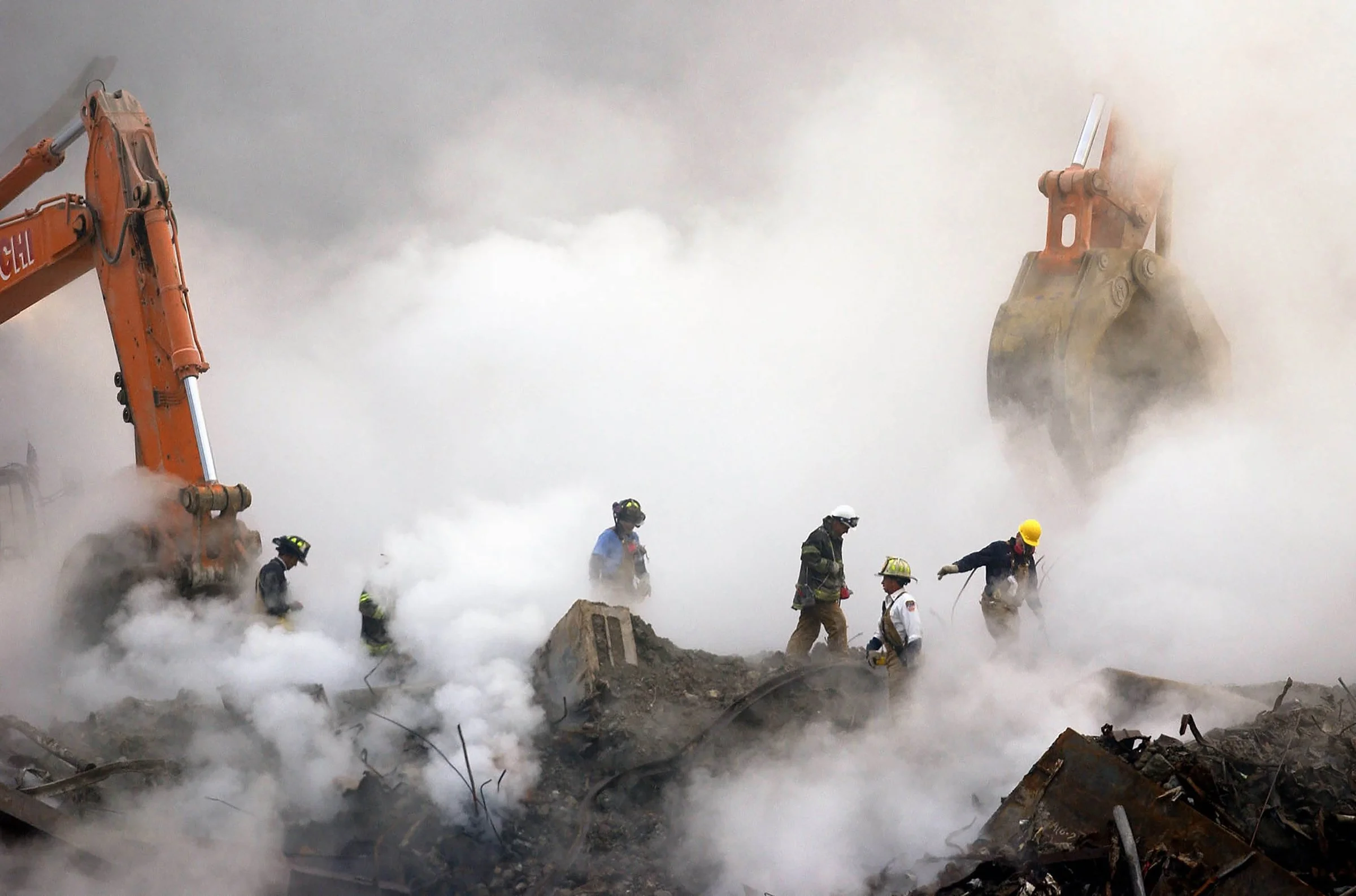
A recent BBC report examines New York City’s release of more than 170,000 pages of records concerning air quality around Ground Zero. The documents, including air-quality reports, contamination data, and correspondence, offer a fuller picture of the concerns that existed as residents, workers, students, volunteers, responders, and others were being told that the air was safe.
The release of these records is important not only because of what they may tell us about the past, but because of what they can teach us about the future in public health.
With a Master of Public Health focused on health systems, management, and policy, I view this story through the relationship between information and access. Public health information is not separate from healthcare. It shapes whether people recognize a risk, take precautions, seek monitoring, preserve relevant records, and ultimately connect with appropriate services. When this information is delayed or difficult to access, the consequences can follow people long after the immediate emergency has ended.
The central lesson is straightforward: transparency is itself a public health responsibility.
Information is part of emergency response
During a disaster, public information can be a real form of protection. People rely on official guidance to decide whether to return home, reopen a business, send a child back to school, report to work, wear protective equipment, seek medical attention, or limit further exposure.
Those decisions are not made in a vacuum. They are shaped by what officials and institutions communicate, how confidently they communicate it, and whether the public can understand and act on the message.
Uncertainty is unavoidable during a rapidly developing emergency. However, there is a meaningful difference between saying that no risk exists and explaining that a risk has not yet been fully characterized. The first can create false reassurance. The second gives people information they can use while acknowledging the limits of the available evidence.
Transparent risk communication does not require creating panic. In fact, plainly communicating uncertainty can strengthen trust. People are more likely to retain confidence in public institutions when changing guidance is explained as a response to new evidence rather than presented without context.
The newly released records make this distinction especially important. When internal concerns and public assurances do not align, the issue extends beyond a single message. It affects whether people believe future warnings and recommendations.
Delayed transparency can become a barrier to care
Some health effects appear immediately, while others may not emerge until years or even decades after an exposure. A person may receive a diagnosis years later, which has been the case for many in Lower Manhattan, only then begin to wonder whether time spent in the affected area might be relevant to their medical history. This is where information policy and healthcare access become inseparable.
If potential risks are communicated early, people can make informed choices and preserve evidence of their presence or activity. Healthcare providers can document exposure histories. Governments can build registries, conduct outreach, and establish surveillance systems for long-term monitoring. Researchers can begin collecting data before the passage of time makes the picture less complete.
When information is withheld, fragmented, or released decades later, it cannot restore those missed opportunities and lead to the affected individuals facing a much more difficult path toward recognizing their risk and accessing care.
The World Trade Center Health Program demonstrates the importance of maintaining a long-term healthcare response. The federal program provides monitoring and treatment for certified WTC-related conditions among eligible responders and survivors. Its four broad populations include responders from the Fire Department of New York City, general responders, survivors, and Pentagon and Shanksville responders.
The work done by the program is monumental in helping this vulnerable population group with access to care. Yet no set of administrative categories can capture every way someone may have encountered an environmental hazard. Lived experience is often messier than policy design.
This is not an argument against standards. It is an argument for building better information and documentation systems.
Transparency is a continuing obligation
The importance of these records should not be reduced to a partisan question. At its core, this is about the obligations of public institutions: to communicate potential risks clearly, distinguish evidence from uncertainty, preserve information, correct earlier guidance when knowledge changes, and remain accountable to the communities affected by their decisions.
Transparency alone cannot reverse an exposure that has already occurred. It can help rebuild trust. Trust is often discussed in Public Health spheres as though it were a public attitude that institutions must somehow persuade people to adopt. From a health-systems perspective, trust is also an outcome of institutional behavior. It is built when agencies share information honestly, explain uncertainty, acknowledge mistakes, and remain present after the immediate crisis has passed.
The long-term health consequences of September 11 has reminded us that recovery is not a single phase with a clear endpoint. Buildings and infrastructure may be rebuilt, but exposure-related conditions can emerge across decades. Public health systems must therefore be designed for longer timelines.
As we approach the 25th anniversary of September 11, the newly released records offer an opportunity to look backward with honesty and accountability. The lesson is not that officials must possess perfect information during every emergency. It is that the public deserves the clearest available account of the evidence even with its limitations, so people can take actions to protect themselves.
It is one of the ways public health protects people, during an emergency, throughout recovery, and long after the crisis has left the headlines. As public health professionals, we must advocate for transparency in information and communication so we can best help communities in need. As consumers, we must do our due diligence by seeking reliable information, asking questions, and sharing verified resources with those who may need them. We all have a role in holding institutions accountable and ensuring that people affected by a crisis are not forgotten when public attention moves on.
Sources, program information and note
Source: “New York City releases documents about air quality after 9/11” — BBC News
Program information: World Trade Center Health Program and “Eligible Groups” — CDC
Author’s note: The views expressed in this article are my own and are informed by my academic background in public health, health systems, management, and policy. They are not intended to represent any agency or organization.
By
Saquib Syed