
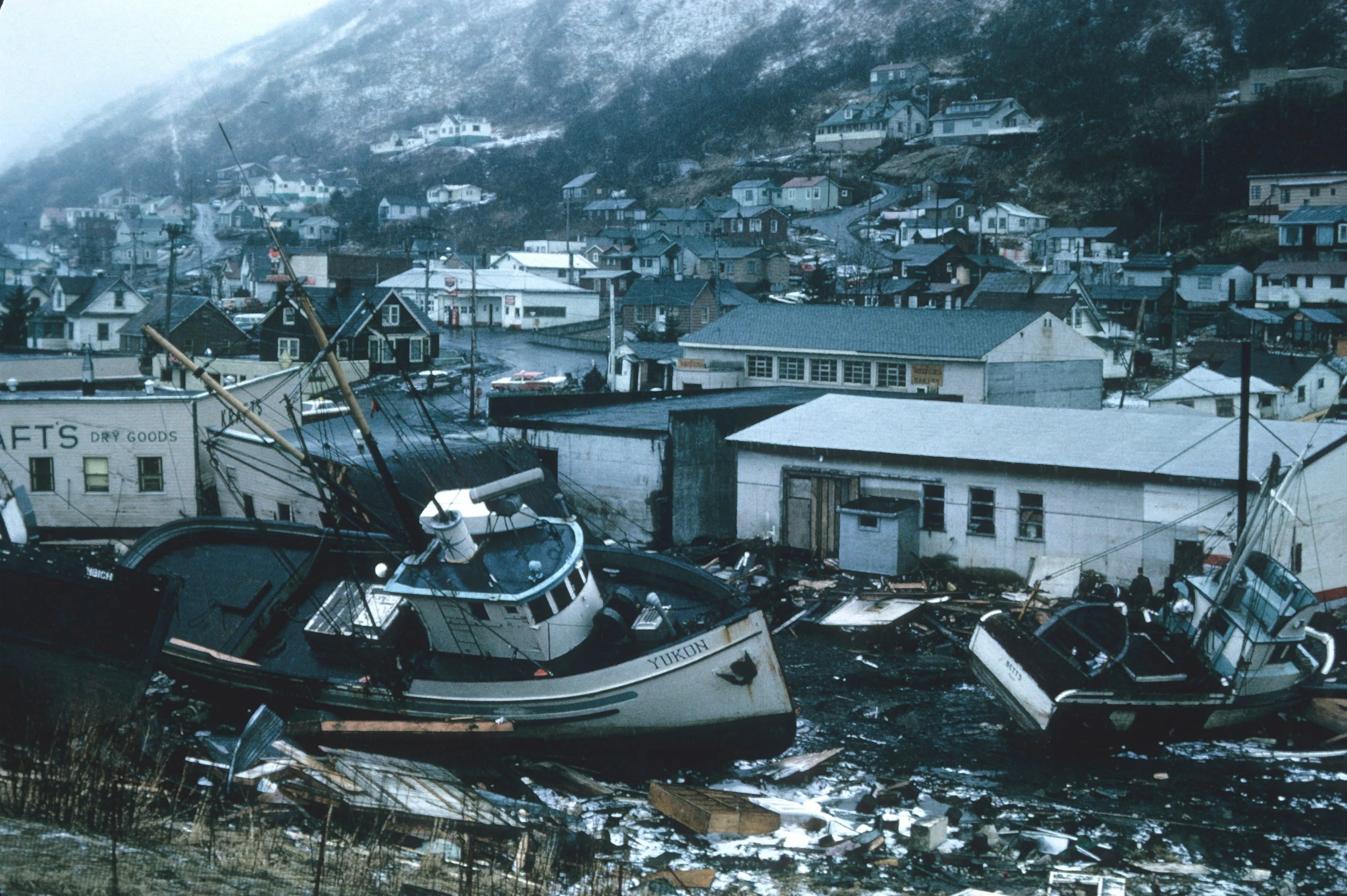
The Invisible Tolls of Extreme Flooding
In May 2026, winds of over 100km/h and rain above 100mm devastated infrastructure in the Western Cape, South Africa, causing flooding, roofs and walls being torn off, and 11 deaths have been confirmed.1 As it stands, over 1655 dwellings have been assessed as damaged, impacting over 5600 people, and the assessments are still ongoing.2 In isolated parts of the Karoo, communities have described roads washed away, food supplies running dangerously low, and a pregnant woman stranded, without access to medical care.3
This is not an isolated event. In South Africa itself, at least 436 people died in the April 2022 floods of KwaZulu-Natal (KZN), which followed ten major floods in the preceding years.4 In the same 2022 storm, KZN was faced with several thousand homes destroyed or damaged, and critical infrastructure such as roads, communication, and electrical systems were heavily impacted.4,5 This May 2026 storm alone swept across six of the nine provinces in South Africa, bringing heavy rainfall, flooding, thunderstorms, damaging winds, and snowfall, prompting the country to declare a national disaster.6
Similar events have occurred elsewhere in the world. In Pakistan, the 2022 floods affected 33 million people, of whom 8 million were forced to flee their homes. More than 20 million people required humanitarian aid, and about half of those faced acute food insecurity.7 Over 1,500 healthcare facilities were partially or completely destroyed, and an estimated 650,000 pregnant women were affected in far-flung rural areas where healthcare resources were already scarce.8
What these events share, beyond the immediate destruction they cause, is a pattern of health consequences that persist long after the water recedes. The immediate physical health impacts of floods include hypothermia, drowning, injuries, as well as the risks associated with evacuating patients, losing health workers and health infrastructure such as essential drugs and supplies.8 In the medium term, communicable diseases, starvation, complications of injury, infected wounds, or poisoning are all indirect effects of flooding.
Alongside these physical health impacts, floods cause mental health challenges that often last considerably longer than the physical aftermath of the flooding. One study showed that flood victims were 4 to 8.7 times more likely to experience mental health problems than those who had not experienced flooding.9 Anxiety, depression, post-traumatic stress disorder, insomnia, and psychosis are commonly reported, primarily amongst the most vulnerable, such as children and those dependent on others’ for their responses to the floods.9,10
Perhaps the most significant feature of these disasters is how unevenly their impacts are distributed. Urban poverty forces many people to live in areas that are more susceptible to natural disasters. For example, Carías et al. (2022)'s study found that urban poor populations experience measurably worse and more prolonged health outcomes after flooding than wealthier urban populations, who show comparatively little effect at all.11 This pattern is not unique to Indonesia. In South Africa’s Western Cape, it was precisely these communities, informal settlements with inadequate drainage, temporary roofing, and limited access to emergency services, that bore the brunt of the May 2026 storm.12
On the ground, the response to these May 2026 storms has been immediate and commendable. Gift of the Givers, South Africa's largest disaster response organisation, distributed hot meals and blankets across informal settlements; hospitals and clinics operated under contingency arrangements, and emergency services fielded hundreds of calls. These interventions, vital as they are, address what is visible. What is far less accounted for, whether in government disaster response, humanitarian efforts, or community-led recovery, is what comes after: the mental health toll, the long-term morbidities, and the compounding effect on communities that were already under-resourced before the first raindrop fell. This is a significant gap, and one that merits closer examination in its own right.
Together, the global cases discussed point to a consistent imbalance in addressing the invisible impacts of extreme flooding: disaster response continues to measure severity primarily by what can be seen and counted in the immediate term (deaths, damaged homes, disrupted infrastructure) while the slower, less visible toll on physical and mental health goes largely undocumented and unaddressed. This is not a shortfall unique to any one country or storm; it recurs wherever disaster planning treats health as secondary to physical reconstruction, and it falls hardest on those with the fewest resources to recover.
This piece does not claim to have the answers. But in the hours and days when coverage is dominated by dramatic images of destruction, it feels necessary to ask: what happens to people's physical and psychological health after the storm is over? If disaster is measured only by its immediate destruction, we will keep underestimating what recovery actually requires, and who bears the cost of getting it wrong. As seen above, the May 2026 storm was not a once-off event. It is part of a global pattern in which vulnerability is the decisive factor in who suffers most and who recovers slowest, and until flood response frameworks explicitly centre health, mental and physical, as a pillar of disaster planning rather than an afterthought to it, that pattern will keep repeating itself, storm after storm, settlement after settlement.
This blog was written by Saleha Suleman.
Saleha is a public health researcher dedicated to strengthening health systems through evidence-based policy and innovation.
References
Nene N. Death toll from recent severe Western Cape storms rises [Internet]. EWN; 2026 May 19 [cited 2026 May 26]. Available from:https://www.ewn.co.za/2026/05/19/death-toll-from-recent-severe-western-cape-storms-rises
Francke R-L. Wrap: Devastating cape town storm affects over 5,000 residents [Internet]. IOL; 2026 May 11 [cited 2026 May 26]. Available from:https://iol.co.za/news/environment/2026-05-11-wrap--devastating-cape-town-storm-affects-over-5000-residents/
Sobuwa Y. In pics: Western Cape residents battle floods, flying roofs and growing food shortages [Internet]. TimesLIVE; 2026 May 12 [cited 2026 May 26]. Available from:https://www.timeslive.co.za/news/south-africa/2026-05-12-in-pics-western-cape-residents-battle-floods-flying-roofs-and-growing-food-shortages/
2022 KwaZulu-Natal floods [Internet]. Wikipedia; 2025 [cited 2026 May 26]. Available from:https://en.wikipedia.org/wiki/2022_KwaZulu-Natal_floods
Magidimisha-Chipungu H. Why are floods in South Africa’s KwaZulu-Natal so devastating? Urban Planning expert explains [Internet]. The Conversation; 2024 Jan 17 [cited 2026 May 26]. Available from:https://theconversation.com/why-are-floods-in-south-africas-kwazulu-natal-so-devastating-urban-planning-expert-explains-221285
Patel F. National disaster declared as severe storms, floods Lash Cape Town [Video]. The Citizen; 2026 [cited 2026 May 26]. Available from:https://www.citizen.co.za/news/national-disaster-declared-severe-storms-floods-snow-lash-several-provinces/
Rafferty JP, Metych M. Pakistan floods of 2022 [Internet]. Encyclopedia Britannica; No date [cited 2026 May 26]. Available from:https://www.britannica.com/event/Pakistan-floods-of-2022
Du W, FitzGerald GJ, Clark M, Hou XY. Health impacts of floods. Prehospital and disaster medicine. 2010 Jun;25(3):265-72.
Bracher J. Health effects of flooding, explained [Internet]. Wellcome; 2022 [cited 2026 May 26]. Available from:https://wellcome.org/insights/articles/how-flooding-can-impact-our-health
Stanke C, Murray V, Amlôt R, Nurse J, Williams R. The effects of flooding on mental health: Outcomes and recommendations from a review of the literature. PLoS currents. 2012 May 30;4:e4f9f1fa9c3cae.
Carías MS, Johnston DW, Knott R, Sweeney R. Flood disasters and health among the urban poor. Health Economics. 2022 Jun 30;31(9):2072.
Bega S. Cape Town storm floods 26 informal settlements and damages more than 10 000 structures [Internet]. Mail & Guardian; 2026 May 12 [cited 2026 Jul 7]. Available from:https://mg.co.za/the-green-guardian/2026-05-12-cape-town-storm-floods-26-informal-settlements-and-damages-more-than-10-000-structures/
At CGHI,